Featured Snippet
A CPAP travel battery is a portable power source designed to run a CPAP machine when wall power is unavailable. It helps travelers maintain sleep therapy during flights, camping trips, road trips, power outages, and international travel.
Travel should be exciting—not stressful because of sleep therapy concerns. For millions of Americans who rely on CPAP treatment, one of the biggest travel challenges is maintaining consistent therapy while away from home. Whether the trip involves camping in a national park, crossing multiple states on a road trip, spending nights in airports, or flying overseas, reliable power becomes essential.
A CPAP travel battery solves this problem by providing portable energy for compatible CPAP machines. Instead of worrying about power outlets, hotel outages, campground hookups, or long flights, travelers can continue therapy almost anywhere.
This guide explains how CPAP travel batteries work, who needs one, how to choose the right model, airline considerations, packing strategies, common mistakes, money saving tips, and practical travel scenarios. By the end, you’ll know exactly how to travel confidently while keeping your sleep therapy uninterrupted.
How to Use a CPAP Travel Battery
- Check your CPAP machine’s power requirements.
- Choose a compatible travel battery.
- Fully charge the battery before departure.
- Connect the battery using approved cables.
- Test the setup before your trip.
CPAP Travel Battery vs Standard Power Bank
| Feature | CPAP Travel Battery | Standard Power Bank |
| CPAP Compatible | Yes | Usually No |
| Higher Capacity | Yes | Limited |
| FAA Friendly Options | Yes | Sometimes |
| Medical Travel Use | Designed For It | Not Designed For It |
Travelers flying within the United States should review current TSA and airline battery regulations before departure. Battery limits and airline policies can change, so always verify requirements directly with your carrier.
What Is a CPAP Travel Battery?
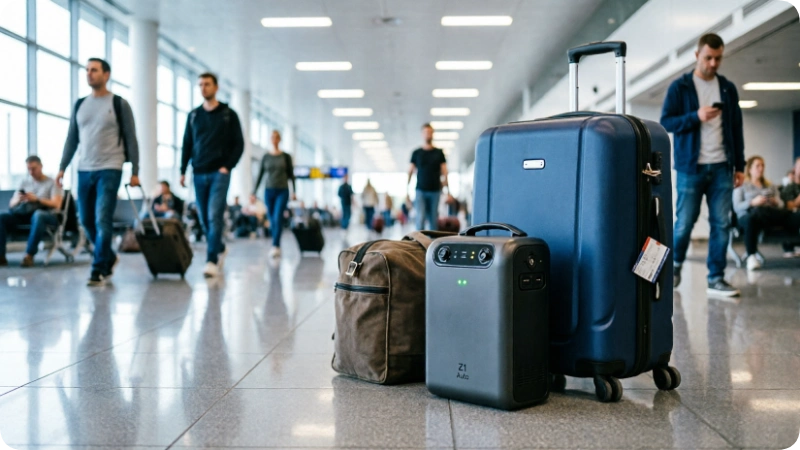
A CPAP travel battery is a portable rechargeable battery specifically designed to power CPAP machines away from traditional electrical outlets. Most models offer enough capacity for one to several nights of therapy depending on machine settings.
Unlike ordinary power banks, CPAP batteries are engineered to support medical equipment requirements. Many include airline compliant designs, DC output options, and compatibility with major CPAP brands.
Quick Facts
| Feature | Details |
| Primary Purpose | Power CPAP machines |
| Best For | Travel, camping, flights, emergencies |
| Rechargeable | Yes |
| Airline Compatible | Many models are |
| Typical Runtime | 1–5 nights |
| Weight Range | Usually 1–5 pounds |
Why Travelers Use CPAP Travel Batteries
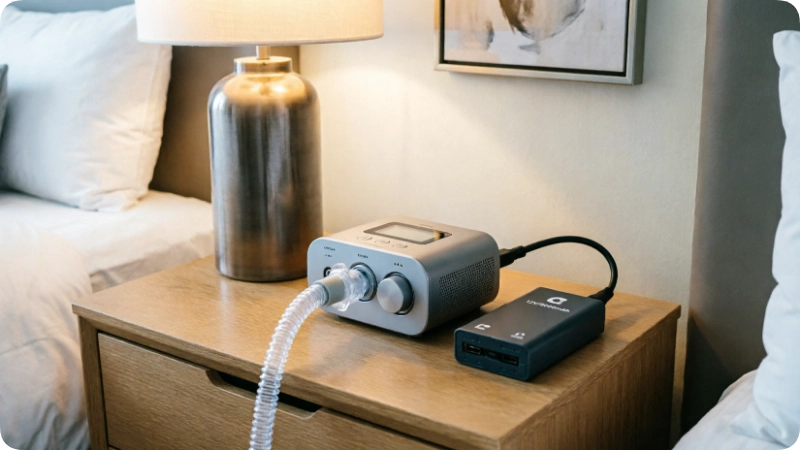
A CPAP travel battery provides independence from power outlets while maintaining treatment consistency.
Common travel situations include:
- Camping in national parks
- RV adventures
- Road trips across the USA
- Long haul flights
- Cruise travel
- Power outages
- International travel
- Remote lodging stays
Missing CPAP therapy can result in poor sleep, daytime fatigue, headaches, and reduced travel enjoyment. A battery helps avoid those issues.
Who Should Buy a CPAP Travel Battery?
A CPAP travel battery is ideal for travelers who frequently spend time away from reliable electrical power.
Best For
- Frequent flyers
- National park campers
- RV travelers
- Outdoor enthusiasts
- Business travelers
- International travelers
- People living in storm prone regions
Who May Not Need One
- Travelers who only stay in major hotels
- People who rarely leave home overnight
- Travelers with alternative backup power solutions
How Long Does a CPAP Travel Battery Last?
Battery runtime depends on several factors, including machine type, pressure settings, and humidifier use.
Most batteries last:
| Usage Scenario | Approximate Runtime |
| CPAP without humidifier | 1–5 nights |
| CPAP with humidifier | Reduced runtime |
| Travel CPAP machine | Longer runtime |
| High pressure settings | Shorter runtime |
Humidifiers and heated tubing typically consume the most power.
Insider Tip #1
Turn off heated humidification when battery power is limited. This simple adjustment often extends runtime significantly.
Best Time to Use a CPAP Travel Battery
CPAP batteries are useful year round, but certain travel seasons create greater demand.
Seasonal Comparison
| Season | Advantages | Challenges |
| Spring | Mild weather camping | Unpredictable storms |
| Summer | Peak outdoor travel | High campground demand |
| Fall | Comfortable temperatures | Shorter daylight hours |
| Winter | Emergency backup value | Cold affects battery performance |
Winter travelers should keep batteries insulated because extreme cold can reduce efficiency.
Understanding Airline and TSA Considerations
Many CPAP travelers fly regularly throughout the United States.
The TSA generally allows CPAP machines as medical devices. However, battery regulations vary based on watt hour ratings and airline requirements.
Before Flying
- Review airline battery rules.
- Check watt hour ratings.
- Carry batteries in hand luggage.
- Label medical equipment clearly.
- Bring manufacturer documentation.
Insider Tip #2
Print battery specifications before travel. Airline staff occasionally request verification.
Always confirm current requirements directly through TSA and airline websites because policies can change.
Choosing the Right CPAP Travel Battery
The best battery depends on travel style, machine compatibility, and trip length.
Important Factors
Capacity
Higher capacity usually means longer runtime.
Weight
Lighter batteries are easier to carry through airports.
Compatibility
Not every battery works with every CPAP machine.
Charging Speed
Fast charging batteries improve convenience during multi day trips.
FAA Compliance
Important for air travelers.
Travel CPAP Machines vs Standard CPAP Machines
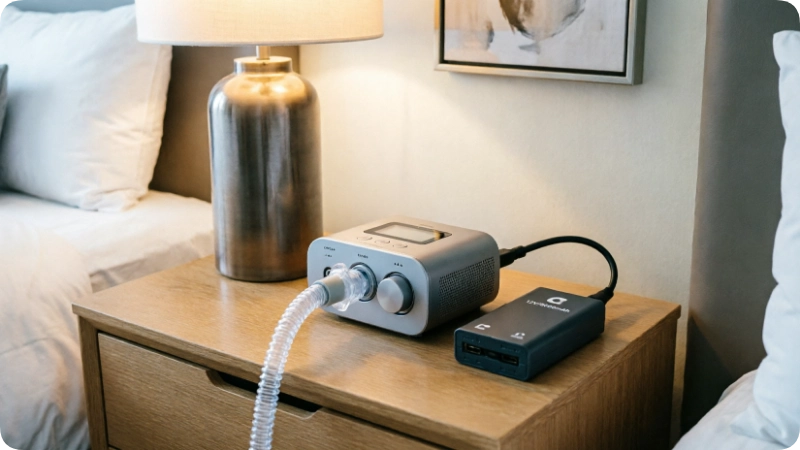
Many travelers pair a travel battery with a compact CPAP machine.
| Feature | Travel CPAP | Standard CPAP |
| Size | Compact | Larger |
| Weight | Lightweight | Heavier |
| Battery Efficiency | Better | Moderate |
| Travel Convenience | Excellent | Good |
Travel focused machines often maximize battery life.
Packing a CPAP Travel Battery
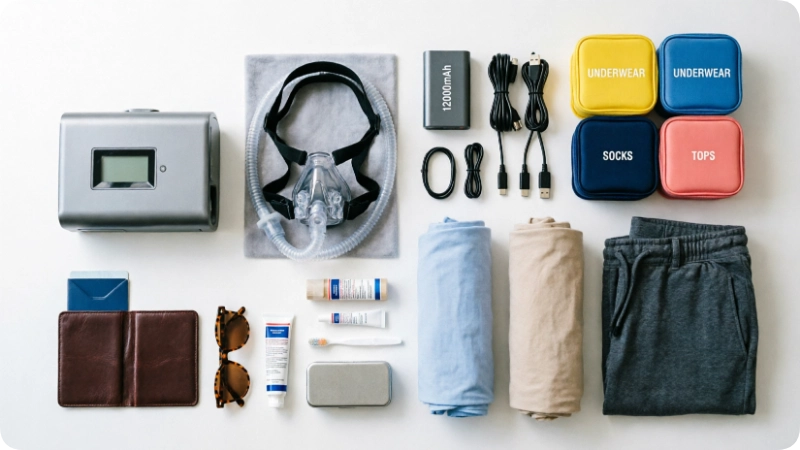
Smart packing protects both equipment and travel plans.
Essential Packing Checklist
- CPAP machine
- Travel battery
- Charging cables
- Backup adapters
- Extension cord
- Carrying case
- Cleaning supplies
- User manuals
Insider Tip #3
Pack the battery and CPAP separately within easy reach for airport security screening.
Road Trips and CPAP Batteries
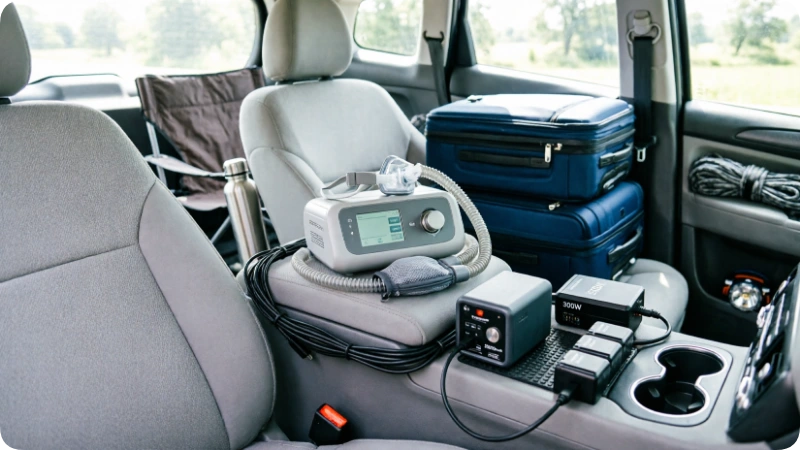
Road trips remain one of the most popular forms of travel in the United States.
Whether driving along the Pacific Coast Highway, exploring the Blue Ridge Parkway, or crossing the Southwest, a CPAP battery provides flexibility.
Benefits include:
- Overnight rest stops
- Remote lodging
- Campgrounds
- Unexpected detours
- Emergency preparedness
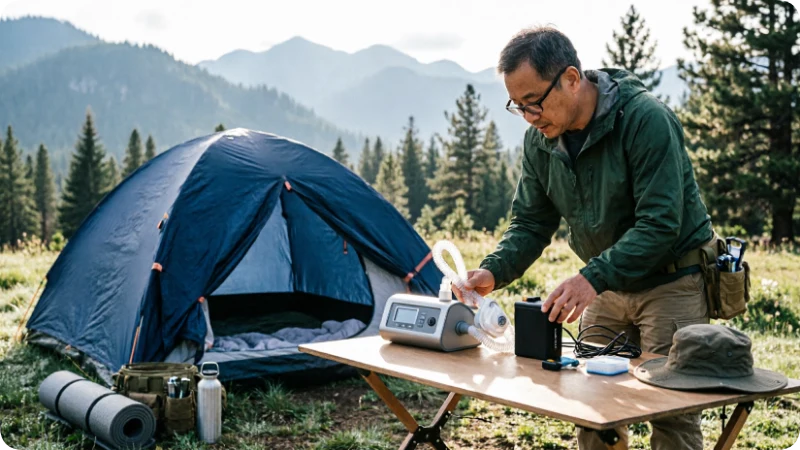
Camping With a CPAP Travel Battery
Camping is one of the most common reasons travelers purchase a CPAP battery.
Popular destinations include:
- Yellowstone National Park
- Yosemite National Park
- Grand Canyon National Park
- Great Smoky Mountains National Park
Many campgrounds offer limited electrical access, making battery power essential.
Insider Tip #4
Test your complete setup for several nights before a major camping trip.
Emergency Backup During Power Outages
Power outages can occur during storms, hurricanes, wildfires, and severe weather events.
A CPAP battery provides:
- Peace of mind
- Continued therapy
- Emergency preparedness
- Reliable overnight power
Travelers often discover that their travel battery doubles as a valuable home backup system.
Accessibility Benefits for Travelers
A CPAP travel battery improves travel accessibility by allowing greater flexibility.
Benefits include:
- More accommodation choices
- Reduced dependence on room location
- Easier outdoor adventures
- Increased confidence during long journeys
Many travelers find batteries particularly useful when visiting remote destinations.
Common Mistakes Travelers Make
Avoiding these mistakes can save money and frustration.
Mistake #1: Buying Without Checking Compatibility
Fix: Verify compatibility directly with your CPAP manufacturer.
Mistake #2: Testing for the First Time During Travel
Fix: Perform a complete home trial before departure.
Mistake #3: Using Heated Features Unnecessarily
Fix: Disable humidifiers and heated tubes when battery conservation matters.
Hidden Gems for CPAP Travelers
Many travelers focus only on hotels and overlook excellent alternatives.
Hidden Gem #1: State Park Cabins
Many state parks offer peaceful accommodations with fewer crowds.
Hidden Gem #2: RV Resorts
RV resorts frequently provide reliable electrical infrastructure and quieter settings.
Hidden Gem #3: Airport Sleep Pods
Some major airports now offer private rest areas that support overnight travelers.
Underrated Alternatives to CPAP Travel Batteries
Some travelers may prefer alternative solutions.
Alternative 1
Portable power stations.
Alternative 2
RV electrical hookups.
Alternative 3
Battery compatible travel CPAP systems.
Each option works best for specific travel styles.
Budget Breakdown
Costs vary significantly based on battery size and features.
| Category | Typical Investment |
| Entry Level | Lower cost |
| Mid Range | Moderate cost |
| Premium | Higher cost |
| Travel Accessories | Additional expense |
Always compare warranty coverage, support, and compatibility before purchasing.
Safety Tips for CPAP Battery Travel
Safety remains critical when transporting rechargeable batteries.
Best Practices
- Avoid extreme temperatures.
- Use manufacturer approved cables.
- Keep batteries dry.
- Store securely during transport.
- Inspect for damage before use.
Insider Tip #5
Recharge batteries immediately after returning home so they remain ready for the next trip or emergency.
Is a CPAP Travel Battery Worth It?
For frequent travelers, the answer is often yes.
Biggest Benefits
- Consistent sleep therapy
- Travel flexibility
- Emergency preparedness
- Greater peace of mind
Honest Drawbacks
- Additional weight
- Extra packing requirements
- Initial purchase cost
- Airline rule research
Most travelers who regularly camp, fly, or travel internationally find the investment worthwhile.
Sample Weekend Travel Scenario
Day Before Departure
- Fully charge battery.
- Test CPAP setup.
- Pack cables and documentation.
Travel Day
- Carry equipment onboard.
- Keep battery accessible.
- Confirm charging opportunities.
Overnight Stay
- Connect battery.
- Disable unnecessary heated features.
- Monitor remaining capacity.
Return Home
- Recharge equipment.
- Inspect components.
- Store properly.
Frequently Asked Questions
Can I take a CPAP travel battery on an airplane?
Yes, many CPAP travel batteries are permitted on airplanes. Airline requirements vary based on battery capacity and watt hour ratings. Always verify current airline and TSA regulations before departure because policies can change.
How many nights will a CPAP travel battery last?
Most batteries provide one to several nights of use. Runtime depends on machine type, pressure settings, battery size, and whether heated humidification is used during therapy.
Do CPAP batteries work during camping trips?
Yes. Camping is one of the most popular uses for CPAP batteries. They allow travelers to maintain sleep therapy even when electrical hookups are unavailable.
Can I use my humidifier with a travel battery?
Yes, but runtime typically decreases significantly. Travelers seeking maximum battery life often turn off humidification and heated tubing features.
Are travel CPAP machines better for battery use?
Travel CPAP machines generally consume less power and often deliver longer battery runtime. They are designed specifically for portability and travel convenience.
What is the biggest mistake CPAP travelers make?
The biggest mistake is failing to test the equipment before departure. A complete home trial helps identify compatibility issues and charging problems before travel begins.
Should I buy a CPAP battery for emergency preparedness?
Yes. Many travelers purchase CPAP batteries for trips and later discover they are valuable during power outages caused by storms, wildfires, hurricanes, or other emergencies.
Conclusion
A CPAP travel battery can transform the travel experience for people who depend on sleep therapy. It provides freedom, flexibility, and reliable power whether you’re camping in a national park, taking a cross country road trip, flying internationally, or preparing for unexpected outages.
The three biggest takeaways are simple:
- Choose a battery that matches your CPAP machine.
- Test everything before leaving home.
- Review airline and safety regulations before travel.
For frequent travelers, outdoor adventurers, and anyone seeking uninterrupted sleep therapy, a CPAP travel battery is often one of the most valuable travel accessories available. Travel farther, sleep better, and enjoy every journey with greater confidence.